Lesson 2A1 Beginner
Cosas y Personas
Wordplay A1 Spanish Course
Lesson 2 · A1 Level · 60 min · English → Spanish
Say it, then make it yours: Tengo dos hermanos y una hermana. Follow with your own answer: ¿Tienes una habitación en tu casa?
English-speaker check: English says ‘I am 20’; Spanish says Tengo 20 años.
What We'll Cover Today
- Nouns & Gender (Masculine / Feminine)~8 min
- Making Plurals (Singular to Plural)~7 min
- Definite Articles (The)~8 min
- Indefinite Articles (A/An/Some)~7 min
- Basic Adjectives & Agreement~10 min
- Verb TENER (To Have)~10 min
- Speaking Practice & Dialogue~5 min
- Review Quiz~5 min
Sustantivos (Nouns) — Masculine & Feminine
In Spanish, EVERY noun has a gender. It's either masculine or feminine.
O
Usually Masculine (ends in -o)
el chico (boy) · el gato (cat) · el libro (book)
A
Usually Feminine (ends in -a)
la chica (girl) · la casa (house) · la mesa (table)
ción / dad
Always Feminine (ends in -ción or -dad)
la estación (station) · la ciudad (city) · la lección (lesson)
Watch out for exceptions!
el día (day) and el mapa (map) are masculine!
la mano (hand) and la radio (radio) are feminine!
el día (day) and el mapa (map) are masculine!
la mano (hand) and la radio (radio) are feminine!
Quick Check — Masculine or Feminine?
Is the noun masculine (M) or feminine (F)? Look at the ending.
1. perro (dog)
Masculine (ends in -o)
2. silla (chair)
Feminine (ends in -a)
3. niña (girl)
Feminine (ends in -a)
4. bolígrafo (pen)
Masculine (ends in -o)
5. problema (problem)
Masculine! (Exception: words ending in -ma are often masculine)
Plurales — Making Words Plural
Making nouns plural is easy in Spanish!
+ s
If it ends in a VOWEL (a, e, i, o, u) add -s
perro → perros · casa → casas · tomate → tomates
+ es
If it ends in a CONSONANT add -es
árbol → árboles (tree) · ciudad → ciudades (city)
z → ces
If it ends in Z, change to C and add -es
lápiz → lápices (pencil) · luz → luces (light)
Quick Check — Plurals
What is the plural form of these nouns?
1. el gato (cat)
gatos (ends in vowel)
2. el hotel (hotel)
hoteles (ends in consonant)
3. la actriz (actress)
actrices (ends in z)
4. la persona (person)
personas (ends in vowel)
5. el hospital (hospital)
hospitales (ends in consonant)
Artículos Definidos — "The"
In English, we just say "the". In Spanish, "the" has 4 forms depending on gender and number!
| Singular | Plural | |
|---|---|---|
| Masculine | el | los |
| Example | el libro (the book) | los libros (the books) |
| Feminine | la | las |
| Example | la casa (the house) | las casas (the houses) |
Pro tip: Always learn new nouns WITH their article! (e.g., memorize "la mesa", not just "mesa").
Artículos Indefinidos — "A / An / Some"
Similarly, "a" or "some" has 4 forms!
| Singular (A / An) | Plural (Some) | |
|---|---|---|
| Masculine | un | unos |
| Example | un coche (a car) | unos coches (some cars) |
| Feminine | una | unas |
| Example | una manzana (an apple) | unas manzanas (some apples) |
Fill In the Blanks — Articles
Choose the correct DEFINITE (el/la/los/las) or INDEFINITE (un/una/unos/unas) article.
1. (The) el niño.
2. (A) una puerta (door).
3. (The - plural) los amigos.
4. (Some) unas profesoras.
5. (The) la ciudad (city - feminine).
6. (A) un pasaporte.
Adjetivos — Core Adjectives
Bueno / Buena
Good
BWEH-noh
Malo / Mala
Bad
MAH-loh
Grande
Big
GRAHN-deh
Pequeño / Pequeña
Small
peh-KEH-nyoh
Bonito / Bonita
Pretty / Beautiful
boh-NEE-toh
Feo / Fea
Ugly
FEH-oh
Interesante
Interesting
een-teh-reh-SAHN-teh
Aburrido / Aburrida
Boring
ah-boo-REE-doh
Nuevo / Nueva
New
NWEH-voh
Viejo / Vieja
Old
vee-EH-hoh
Más Colores y Números — More Colours & Numbers
Morado
Purple
moh-RAH-doh
Naranja
Orange
nah-RAHN-hah
Rosa
Pink
ROH-sah
Gris
Grey
grees
Treinta
Thirty
TRAYN-tah
Cincuenta
Fifty
seen-KWEN-tah
Ochenta
Eighty
oh-CHEN-tah
Cien
One hundred
see-EN
Ahora empareja cada palabra en español con su traducción en inglés.
Morado
Naranja
Rosa
Gris
Treinta
Cincuenta
Ochenta
Cien
Thirty
Pink
One hundred
Purple
Eighty
Orange
Grey
Fifty
Adjetivos — Opposites

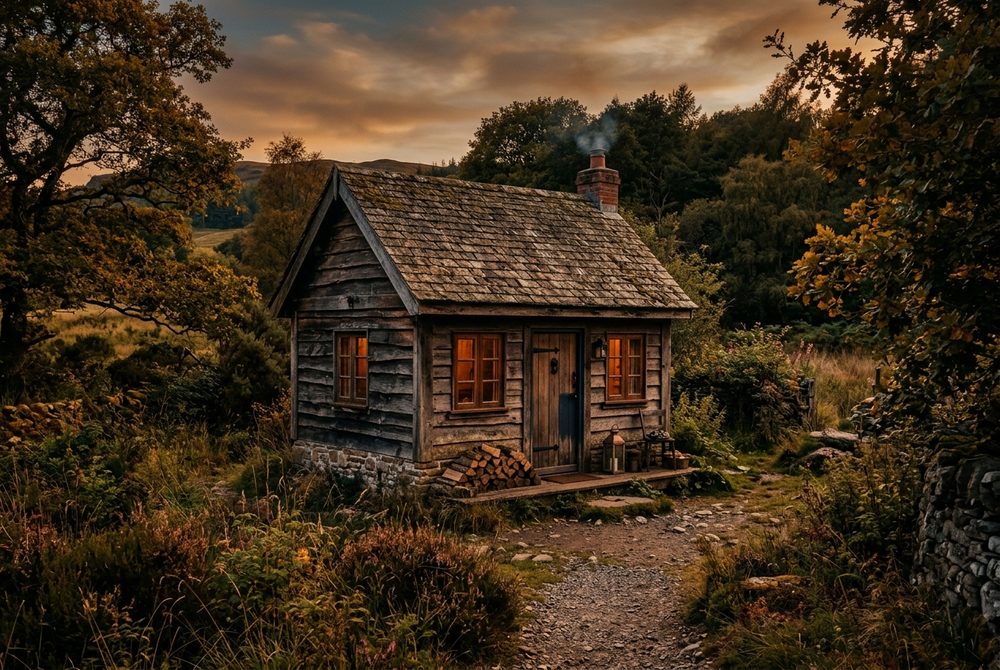
¿Cómo es la primera casa?
(How is the first house? Hint: grande, nueva)
La primera casa es muy grande y moderna.
¿Cómo es la segunda casa?
(Hint: pequeña, vieja)
La segunda casa es pequeña y vieja.
Adjective Agreement
Adjectives must match the noun in Gender and Number!
| Masculine | Feminine | |
|---|---|---|
| Singular | bonito | bonita |
| Plural | bonitos | bonitas |
Adjectives ending in -e or consonants:
They only change for number, NOT gender!
el chico grande / la chica grande
los chicos grandes / las chicas grandes
They only change for number, NOT gender!
el chico grande / la chica grande
los chicos grandes / las chicas grandes
Word Order — Noun + Adjective
In English: Adjective + Noun. In Spanish: Noun + Adjective!
The big car
El coche grande (The car big)
El coche grande (The car big)
A pretty house
Una casa bonita (A house pretty)
Una casa bonita (A house pretty)
Some good books
Unos libros buenos (Some books good)
Unos libros buenos (Some books good)
Spot the Mistake — Word Order
Click the word that is in the WRONG position to correct the sentence!
Tengounrojocoche.
¡Correcto! Remember, in Spanish the noun (coche) comes BEFORE the adjective (rojo).
Quick Check — Describing Things
Translate the phrases into Spanish. Don't forget agreement and word order!
1. The small boy
El chico pequeño
2. A big hotel
Un hotel grande
3. The interesting classes (la clase)
Las clases interesantes
4. Some old cars (el coche)
Unos coches viejos
5. The bad problems (el problema)
Los problemas malos
El Verbo TENER — "To Have"
TENER is one of the most important verbs in Spanish! It's irregular.
| Pronoun | TENER | Example sentence |
|---|---|---|
| Yo | tengo | Yo tengo un perro. — I have a dog. |
| Tú | tienes | Tú tienes un hermano. — You have a brother. |
| Él / Ella / Ud. | tiene | Ella tiene una casa grande. — She has a big house. |
| Nosotros | tenemos | Nosotros tenemos tiempo. — We have time. |
| Vosotros | tenéis | Vosotros tenéis hambre. — You all have hunger. |
| Ellos / Ellas / Uds. | tienen | Ellos tienen un coche nuevo. — They have a new car. |
Quick Check — TENER Conjugation
Match the pronoun to the correct form of the verb TENER.
1. Nosotros ______ un perro.
2. Ellos ______ dos gatos.
Think before you reveal the answer: Model answer: Tengo dos hermanos y una hermana. Now say or write your own answer to: ¿Tienes una habitación en tu casa?
English-speaker check: English says ‘I am 20’; Spanish says Tengo 20 años.
Usos de TENER — Uses of "To Have"
In Spanish, we use TENER for possession, but ALSO for age!
Possession
Owning things
Yo tengo un pasaporte. (I have a passport.)
Family
Family members
Ella tiene dos hermanas. (She has two sisters.)
Age
Years you "have" (In English we say "I am x years old")
Yo tengo veinte años. (Literally: I have 20 years. = I am 20 years old.)
¿Cuántos años tienes? (How old are you?)
¿Cuántos años tienes? (How old are you?)
¿Cuántos años tienen?
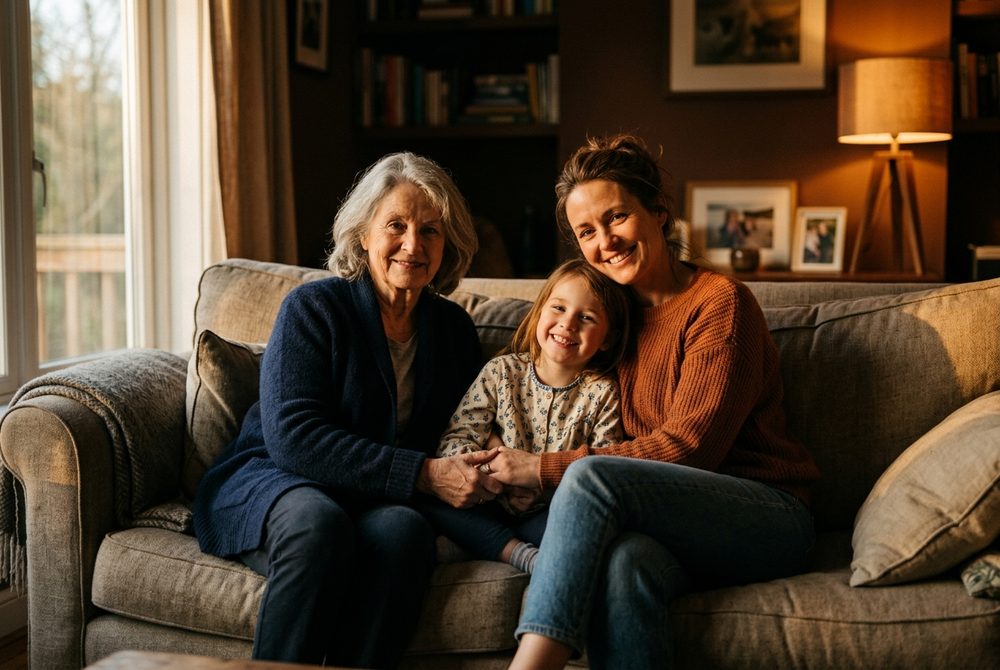
Build the sentence: She is 80 years old.
La abuela tiene ochenta años.
Say it, then make it yours: Tengo dos hermanos y una hermana. Follow with your own answer: ¿Tienes una habitación en tu casa?
English-speaker check: English says ‘I am 20’; Spanish says Tengo 20 años.
Fill In the Blanks — TENER
Which form of TENER completes each sentence? Click each answer to check.
1. Yo tengo un coche azul.
2. Tú tienes veinticinco años.
3. María tiene una casa muy bonita.
4. Nosotros tenemos un profesor excelente.
5. Ellos tienen dos gatos pequeños.
6. ¿Usted tiene pasaporte?
Mini Diálogo — Speaking Practice
Practice in pairs! Practice asking and answering about what you have.
A: ¡Hola! ¿Cuántos años tienes? (Hi! How old are you?)
B: Yo tengo veinte años. ¿Y tú? (I am 20 years old. And you?)
A: Tengo treinta años. (I am 30 years old.)
B: ¿Tienes mascotas? (Do you have pets?)
A: Sí, tengo un gato. Es muy bonito. (Yes, I have a cat. It's very pretty.)
B: ¡Qué bien! Yo tengo un perro grande. (How nice! I have a big dog.)
Review Quiz — Let's See What You Know!
Click an answer to check. Green = correct, red = wrong.
1. How do you make "el hotel" plural?
2. Translate: "A pretty house"
3. Which article is correct for "problema"?
4. Translate: "I am 30 years old" (30 = treinta)
Translate: "The pretty houses" (casa = house, bonita = pretty)
Practice — Spanish Word Order
The student says the correct order out loud, the teacher clicks to check.
1. casa / bonita / una
Reveal
2. coche / rojo / un
Reveal
3. perro / pequeño / un
Reveal
4. gatos / negros / dos
Reveal
Image Hotspots — La Casa
The student says the room in Spanish, the teacher clicks the matching area.
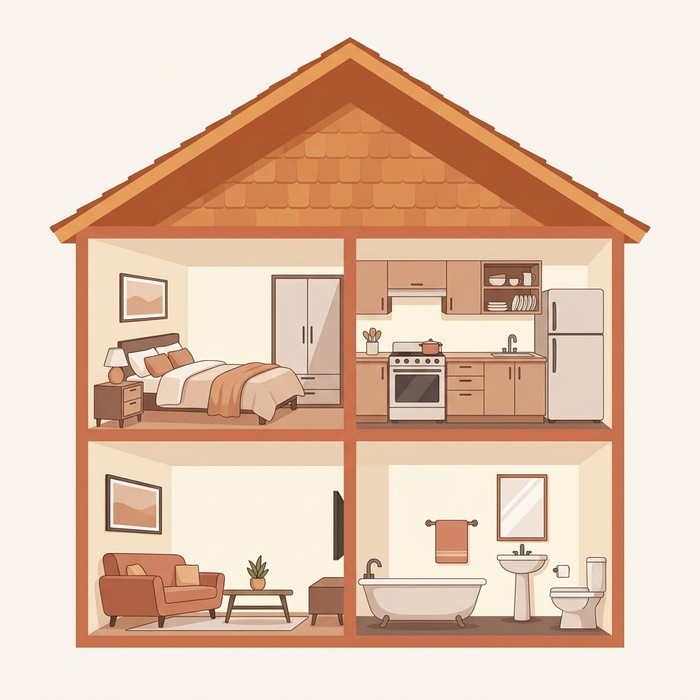 el dormitorio
la cocina
la sala
el baño
el dormitorio
la cocina
la sala
el baño
Use the words in a sentence: Tengo dos hermanos y una hermana. Ask a partner: ¿Tienes una habitación en tu casa? Notice the meaning before you memorise a translation.
English-speaker check: English says ‘I am 20’; Spanish says Tengo 20 años.
Review Quiz — Part 2!
Keep going!
5. Translate: "They have a big dog" (perro)
6. How do you say "Some books"? (libro = book)
7. "The interesting classes" (clase)
¡Buen trabajo! — Great Work Today!
What We Learned
- ◆Masculine & Feminine Nouns
- ◆Making nouns plural
- ◆Definite & Indefinite Articles
- ◆Adjective Agreement & Word Order
- ◆Verb TENER (to have / age)
For Next Class
Practice: Point at 5 things in your house and name them with "un/una/el/la".
Memorize: The conjugation of TENER
Coming up: Family vocabulary, My Pets, and Possessive Adjectives (My, your, his)
¡Hasta la próxima clase!
See you next class!
Notes